
Lost in the Dark.
20/20 on the Chart.
For many patients, night vision loss is the earliest alarm indicating retinal dysfunction. A patient might walk into an eye clinic and read a perfect 20/20 on the standard chart, but they will also report, “I can see fine in the exam room, but I can't drive at night.”
This symptom, known as nyctalopia, is often dismissed as a normal sign of aging, but it is actually a critical, the earliest warning of retinal dysfunction.
Vision Comparison
Drag the handle or use the slider to reveal each condition
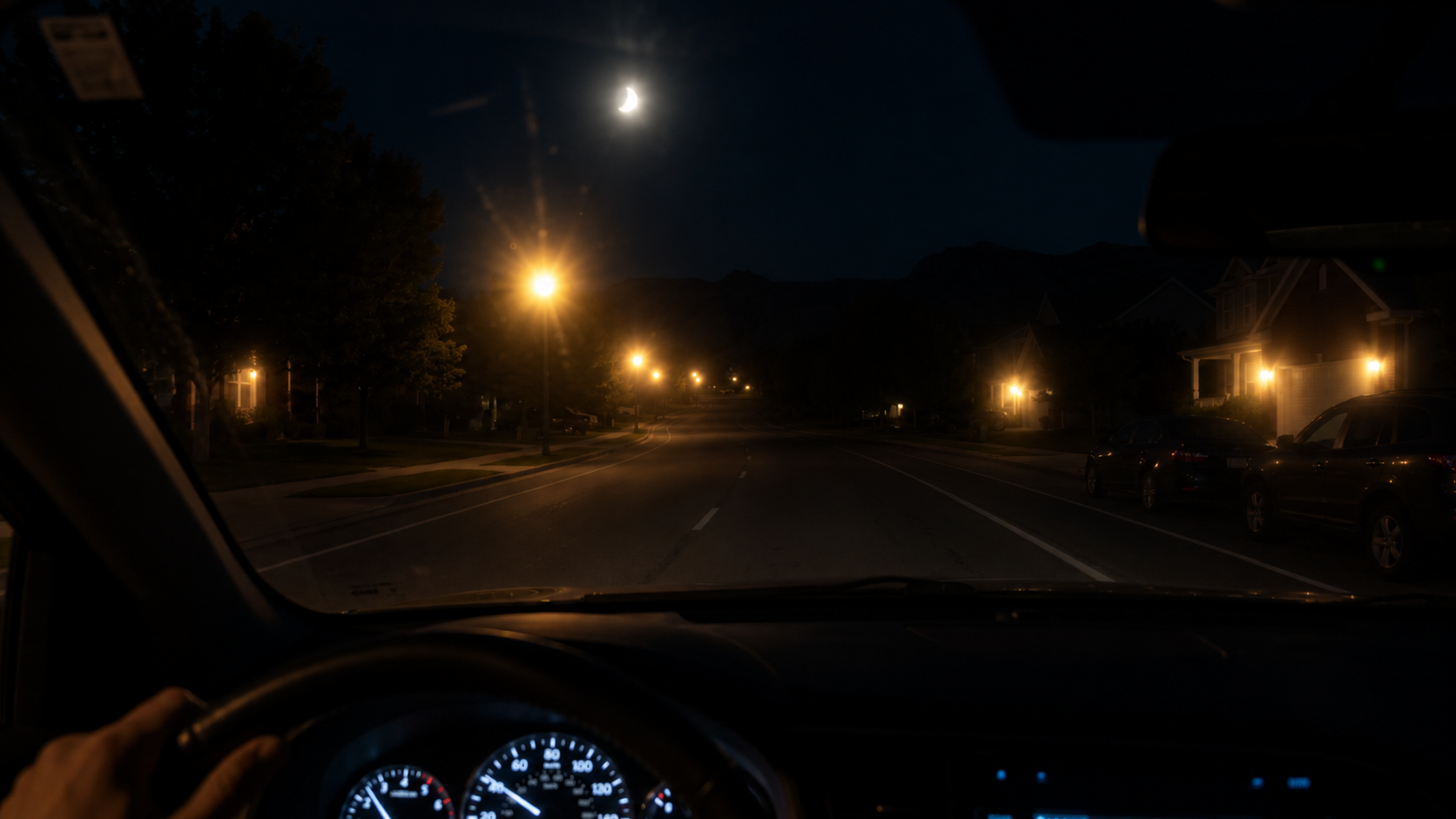

Function fails before structure does
Night vision is important for normal functioning. Moving confidently through dimly lit hallways, stairwells, or outdoor paths after dark prevents falls and injuries. Spotting pedestrians, road signs, and other cars on unlit roads relies heavily on eyes adjusting to darkness.
The retina operates two distinct photoreceptor systems. Cones handle daylight and central vision, while rods are responsible for low-light vision and peripheral awareness. Because rods demand enormous energy to maintain their function, they are exquisitely sensitive to metabolic stress. As a result, rods slow down and fail first in age-related macular degeneration, diabetic retinopathy, drug retinal toxicities, and many other retinal diseases.
Most retinal diseases are found too late because the standard of care relies heavily on imaging tests. Imaging tools like OCT and fundus photography confirm structural damage that has already occurred. By the time a scan looks abnormal, the patient has already lost crucial time.
However, measuring how quickly the retina recovers from a standardized bleach reveals dysfunction long before scans look abnormal. Dark adaptation testing catches these early sparks before vision is lost.